
Introduction
Best heel protectors for dry cracked heels are becoming a popular choice for people who want extra heel cushioning and daily comfort. When the skin around the heel becomes dry, thickened, or exposed to repeated pressure, supportive protection may help reduce friction and improve comfort during walking. Dry cracked heels are a common foot concern experienced by many individuals, especially during colder seasons or after long hours of standing and walking. The skin around the heel is naturally thicker because it supports the body’s weight and absorbs pressure during movement. However, when the skin becomes dry, thickened, or exposed to repeated friction, it may begin to split and develop visible cracks.
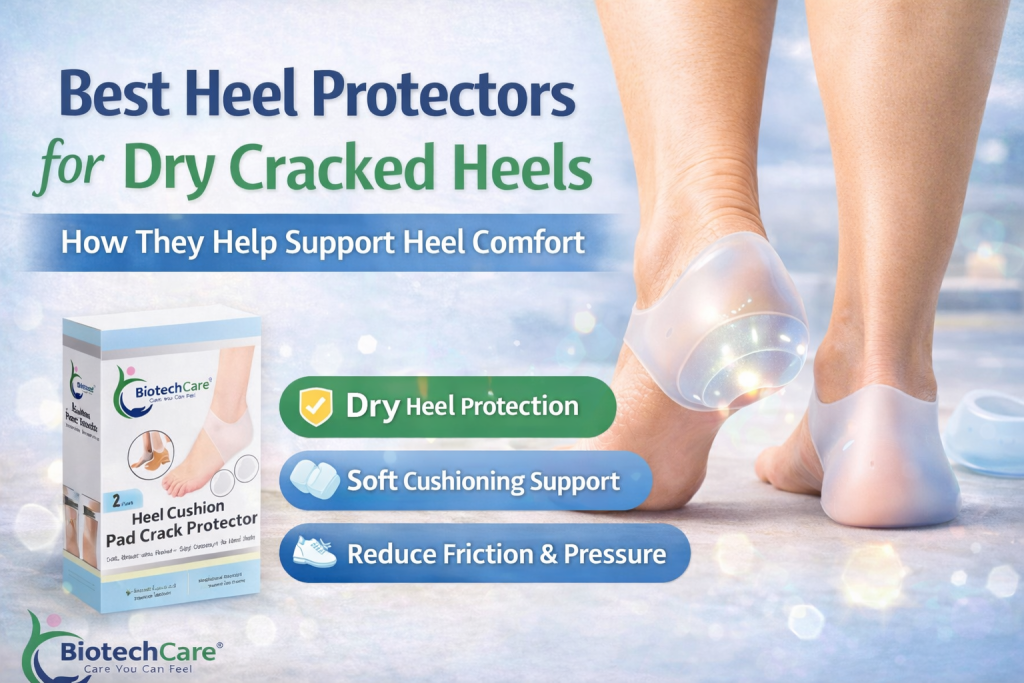
While moisturizers and exfoliation can help maintain smoother skin, many people also look for additional ways to protect their heels from daily pressure and irritation. One practical solution that has gained popularity is the use of heel protectors.
Heel protectors are designed to create a soft cushioning barrier around the heel, helping to reduce friction and distribute pressure more evenly during walking. When used as part of a consistent foot care routine, they may help support overall heel comfort.
If you want to understand the underlying causes first, you can read our guide on why do heels crack which explains the most common reasons heel cracks develop.
You may also find it helpful to learn how to prevent cracked heels naturally by following simple daily foot care habits that support healthier heel skin.
In this article, we will explore how heel protectors work, who may benefit from using them, and how they can become part of a simple daily foot care routine.Many people search for the best heel protectors for dry cracked heels when daily walking and standing begin to affect heel comfort.
Daily Heel Care Routine
Combining moisture, support, and protection can help create a more comfortable heel care routine for everyday life.
More Comfortable Heels
Why Best Heel Protectors for Dry Cracked Heels Matter
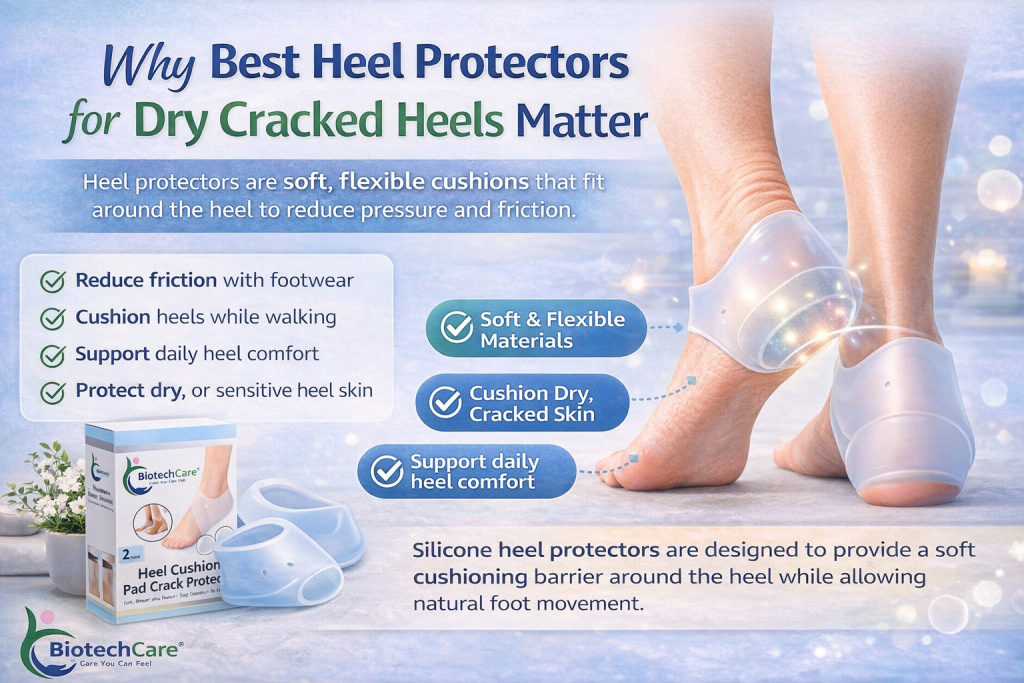
Heel protectors are soft cushioning pads or sleeves designed to fit around the heel area. Their main purpose is to provide extra comfort and protection by reducing pressure and friction on the heel skin.
Many heel protectors are made from flexible materials such as silicone or gel. These materials are soft, lightweight, and designed to move naturally with the foot while providing gentle support.
Heel protectors are commonly used to help:
• Reduce friction between the heel and footwear
• Provide cushioning while walking or standing
• Support comfort during daily activities
• Protect dry or sensitive heel skin
A commonly used option includes silicone heel protectors which are designed to create a soft barrier around the heel without restricting natural movement.
Because silicone is flexible and breathable, it allows the foot to move comfortably throughout the day.
Why Heel Protection Is Important for Dry Heels
The heel is one of the most pressure-sensitive areas of the foot. Each step we take places weight and impact directly on the heel pad. Over time, this repeated pressure may contribute to dryness and thickening of the skin.
When heel skin becomes dry, it may lose flexibility. As pressure increases during walking or standing, the skin may stretch and eventually split.
Experts from the American Academy of Dermatology explain that dry skin occurs when the skin loses natural oils and moisture. This can make thicker areas of the body, such as the heels, more prone to roughness.
By reducing friction and supporting the heel area, protective cushioning may help improve overall foot comfort.
How Best Heel Protectors for Dry Cracked Heels Work
Heel protectors work by adding a soft cushioning layer around the heel. This layer helps absorb pressure and reduce direct friction between the heel and surrounding surfaces.
Pressure Distribution
During walking, the heel absorbs much of the body’s weight. Heel protectors help distribute this pressure more evenly across the heel area, which may reduce stress on specific points.
Friction Reduction
Repeated rubbing between footwear and the heel may cause skin irritation. Heel protectors create a smooth protective barrier that helps reduce this friction.
Cushioning Support
Soft silicone materials provide gentle cushioning that supports comfort during standing or walking for extended periods.
Skin Comfort
Some individuals find that protective cushioning helps maintain a more comfortable environment for the heel skin.The best heel protectors for dry cracked heels are usually soft, flexible, and comfortable enough for daily wear.
How Heel Protectors Support Dry Cracked Heels
A premium heel care routine is not only about moisturizing. Daily comfort also depends on reducing repeated pressure, lowering friction, and adding soft cushioning support where the heel needs it most.
More Stress on Dry Heels
Daily walking, hard surfaces, and repeated rubbing may place extra stress on heel skin that is already dry or thickened.
- Repeated friction from footwear
- More pressure during standing
- Dry skin may lose flexibility
- Hard floors may increase discomfort
Heel Stress Meter
More Comfort, Less Friction
A soft protective layer around the heel may help distribute pressure more evenly and support better comfort during movement.
- Softer barrier around the heel
- Better cushioning during walking
- Helps reduce repeated rubbing
- Useful with daily foot care habits
Who May Benefit From Heel Protectors
Heel protectors are often used by individuals who experience frequent heel pressure during their daily routines.
People who may benefit include:
• Retail employees
• Teachers
• Nurses and healthcare professionals
• Warehouse workers
• Fitness enthusiasts
• Individuals who walk frequently throughout the day
Because these individuals often spend long hours standing or walking, their heels experience repeated stress. Protective cushioning may help support comfort during daily activities.
Heel Protectors vs Traditional Heel Care Methods
Many people use moisturizers or foot creams as part of their heel care routine. While these products help maintain skin hydration, they do not always address pressure and friction caused by daily movement.
Heel protectors focus more on reducing physical stress on the heel.
| Heel Care Method | Main Benefit |
|---|---|
| Moisturizing creams | Helps maintain skin hydration |
| Foot scrubs | Removes rough skin buildup |
| Heel protectors | Reduces friction and pressure |
| Supportive footwear | Improves stability and comfort |
Using a combination of these approaches can help support healthier heel skin.
You can also explore our detailed cracked heel care guide which explains simple steps to maintain smoother heel skin.
How to Choose the Best Heel Protectors for Dry Cracked Heels
Heel protectors can be used during many everyday activities where heel pressure may increase.
Common situations include:
• Long work shifts that require standing
• Walking for extended periods
• Wearing shoes that may cause friction
• Walking at home on hard surfaces
Because silicone heel protectors are flexible, they can often be worn inside socks or supportive footwear. When comparing products, people often look for the best heel protectors for dry cracked heels that provide cushioning without feeling bulky.
Combining Heel Protectors With a Daily Foot Care Routine
Heel protectors often work best when combined with a consistent foot care routine.
A basic daily routine may include:
• Washing feet regularly
• Applying moisturizer after bathing
• Wearing supportive footwear
• Reducing friction around the heel
• Gently exfoliating rough skin occasionally
Maintaining these habits can help improve overall foot comfort and support healthier heel skin.
If your heels already feel dry, you can explore this helpful guide on how to heal dry cracked heels at home which explains practical steps for daily care.
Environmental Factors That Affect Heel Skin
Environmental conditions also influence heel dryness. Cold temperatures, low humidity, and indoor heating can reduce skin moisture levels.
According to the Mayo Clinic dry skin guide, environmental dryness can affect skin elasticity and make the skin more prone to roughness.
During colder seasons, consistent moisturizing and protective cushioning may help support skin comfort.
Simple Tips for Choosing Heel Protectors
If you are considering heel protectors, there are a few factors that may help you choose the right option.
Material
Silicone materials are often preferred because they are flexible and comfortable.
Fit
Heel protectors should fit snugly without feeling too tight or restricting movement.
Breathability
Breathable materials help maintain comfort during extended wear.
Ease of Cleaning
Washable heel protectors allow for easy maintenance and hygiene.
Choosing the right product can help improve daily comfort and support a consistent foot care routine.
Final Thoughts
Dry cracked heels are often caused by a combination of dryness, pressure, and daily activity. While moisturizers and exfoliation help maintain skin hydration, reducing friction and supporting the heel area can also play an important role.
Heel protectors provide a soft cushioning barrier that may help distribute pressure and improve overall comfort during walking or standing.
When combined with proper foot care habits and supportive footwear, they can become a useful addition to a daily heel care routine.
By understanding the causes of dry heels and taking simple preventive steps, many people can maintain healthier heel skin and improve their overall foot comfort.Choosing the best heel protectors for dry cracked heels may help support a more comfortable daily heel care routine.
For more helpful foot care resources and product information, you can also explore the BiotechCare website.
Frequently Asked Questions About Heel Protectors
What are the best heel protectors for dry cracked heels?
The best heel protectors for dry cracked heels are typically soft silicone or gel sleeves designed to cushion the heel and reduce friction. These protectors create a barrier between the heel and footwear, helping support comfort during daily walking and standing.
How do heel protectors help reduce friction on dry heels?
Heel protectors add a soft cushioning layer around the heel. This layer reduces rubbing between the heel and footwear, which may help minimize friction that often contributes to dry or rough heel skin.
Are silicone heel protectors good for dry cracked heels?
Silicone heel protectors are commonly used because they are flexible, lightweight, and comfortable. The material allows natural foot movement while providing soft cushioning support around the heel area.
Can heel protectors be worn every day?
Yes, many people wear heel protectors during everyday activities such as walking, working, or standing for long periods. Their flexible design allows them to be worn comfortably inside socks or supportive footwear.
Do heel protectors help cushion heels while walking?
Heel protectors are designed to provide additional cushioning support. This cushioning may help distribute pressure more evenly across the heel when walking or standing.
What is the difference between heel protectors and heel creams?
Heel creams focus on moisturizing and hydrating the skin, while heel protectors focus on reducing friction and pressure on the heel. Many people use both together as part of a daily foot care routine.
Who should use heel protectors for cracked heels?
Heel protectors may benefit individuals who stand or walk frequently during the day, including healthcare workers, teachers, retail employees, warehouse staff, and people with active lifestyles.
How do heel protectors support daily heel comfort?
Heel protectors support comfort by cushioning the heel area and helping reduce friction caused by footwear or hard surfaces. This may help make daily movement more comfortable.
Can heel protectors be used with socks or shoes?
Yes, most heel protectors are designed to be worn inside socks or shoes. Their flexible silicone structure allows them to stay comfortably in place during everyday activities.
Are heel protectors part of a daily foot care routine?
Heel protectors can be used alongside a simple foot care routine that includes washing feet, moisturizing regularly, wearing supportive footwear, and reducing friction around the heel area.
Give Your Heels the Soft Support They Deserve
If dry, rough heels are affecting your daily comfort, adding a soft cushioning layer can make a real difference. BiotechCare Silicone Heel Protectors are designed to help reduce friction, cushion pressure, and support more comfortable movement throughout the day.