
Introduction
Why do heels crack? Many people ask this question when they notice rough, dry skin developing around their heels. Understanding why heels crack is important because the heel carries body weight during standing and walking. When the skin becomes dry, pressured, or loses flexibility, small splits can begin to appear.
While mild heel cracks may only cause roughness, deeper cracks can lead to discomfort during daily activities. Understanding why heels crack can help individuals take better care of their feet and maintain healthier skin.
In this article, we will explore seven common causes of cracked heels and explain how daily habits and protective care may help support heel health. You can also explore helpful foot wellness resources where we share practical information and everyday foot care solutions.
Many people ask why heels crack more during winter or after long hours of standing. In most cases, the answer involves dryness, pressure, friction, and lifestyle habits.
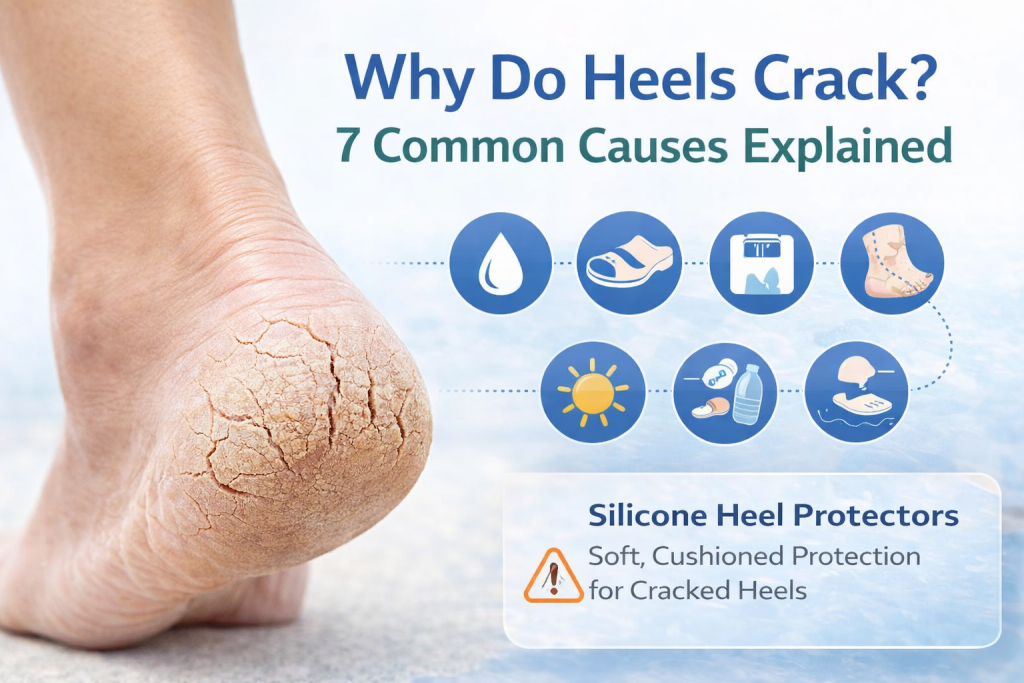
1. Dry Skin Around the Heel – A Common Reason Why Heels Crack
Dry skin is one of the most common reasons why heels crack. The heel area contains fewer oil glands compared to other parts of the body. When the skin becomes excessively dry, it may lose elasticity and become rigid.
As pressure builds during standing or walking, hardened skin may begin to split. According to the American Academy of Dermatology, dry skin develops when the skin loses moisture and natural oils, making thicker areas like the heels more prone to cracking.
Signs of dry heel skin may include:
• Rough or flaky skin
• Thickened heel edges
• White or yellowish heel skin
• Visible small cracks
Keeping the skin moisturized regularly may help maintain flexibility. If you want practical solutions, you can read how to heal dry cracked heels at home, which explains simple daily steps to support healthier heel skin.
Many foot care specialists explain that why heels crack often depends on daily habits such as footwear choices, standing time, and skin hydration.
2. Prolonged Standing – Another Reason Why Heels Crack
Another important reason why heels crack is prolonged standing or walking. Many professions require people to stay on their feet for long hours during the day.
Common examples include:
• Nurses and healthcare professionals
• Teachers
• Retail workers
• Warehouse employees
• Factory staff
Continuous pressure causes the heel pad to expand sideways. If the surrounding skin becomes dry or thickened, this expansion may lead to cracks forming around the heel.
Experts from the Cleveland Clinic explain that prolonged pressure on the feet can contribute to dryness and heel skin splitting.
(Insert Image – Heel pressure illustration)
3. Open-Back Footwear and Why Heels Crack Over Time
Footwear choices also influence heel skin condition. Shoes that do not support the heel properly may allow the heel pad to spread outward when walking.
Common examples include:
• Flip-flops
• Open-back sandals
• Loose slippers
Without proper support, repeated pressure combined with dry skin may contribute to the development of heel cracks.
(Insert Image – Footwear comparison)
4. Environmental Factors That Explain Why Heels Crack
Daily foot care is essential for maintaining healthy heel skin. When feet are not cleaned, moisturized, or cared for regularly, dead skin may accumulate around the heel.
Over time, this buildup thickens the outer skin layer and reduces flexibility, making cracks more likely.
Simple habits that may help include:
• Washing feet daily
• Drying feet thoroughly
• Applying moisturizer regularly
• Gently exfoliating rough skin
You can also learn more prevention tips in this helpful cracked heel care guide.
(Insert Image – Foot care routine)
5. Pressure From Body Weight
Body weight also affects how much pressure the heel experiences. The heel acts as the primary support point when standing or walking.
Increased pressure can cause the heel fat pad to expand outward, stretching the surrounding skin. If the skin becomes dry or thickened, cracks may develop along the edges.
Some individuals use cushioning solutions such as silicone heel protectors, which help distribute pressure more evenly and create a protective layer around the heel.
(Insert Image – Heel protector lifestyle)
6. Environmental Factors
Environmental conditions can also influence heel dryness.
Common factors include:
• Cold weather
• Low humidity
• Air-conditioned environments
• Frequent exposure to water
According to the Mayo Clinic dry skin guide, cold temperatures and indoor heating can remove moisture from the skin and increase dryness.
(Insert Image – Winter dry skin illustration)
7. Friction and Daily Activity
Friction from daily activities may also contribute to cracked heels. Repeated rubbing between the foot and footwear can cause the outer skin layer to thicken.
Over time, thickened skin may lose flexibility and crack under pressure.
Activities that may increase friction include:
• Long walking routines
• Running
• Wearing tight footwear
• Walking barefoot on hard surfaces
(Insert Image – Walking friction illustration)
Why Do Heels Crack More in Winter?
Cold weather is another reason why heels crack, because low humidity and indoor heating remove moisture from the skin.
Supporting Heel Comfort in Daily Life
Although cracked heels are common, simple habits may help support healthier skin.
Helpful practices include:
• Keeping feet clean and moisturized
• Wearing supportive footwear
• Reducing prolonged pressure on the heels
• Protecting the heel area during daily activities
Many people also choose protective cushioning products like silicone heel protectors to improve comfort during everyday movement.
Final Thoughts
Understanding why heels crack can help individuals take better care of their feet. In many cases, cracked heels develop due to dryness, pressure, friction, and daily lifestyle habits.
By following simple foot care routines, wearing supportive footwear, and protecting the heel area, it may be possible to maintain healthier heel skin over time.
Taking care of your feet is an important part of overall wellness, especially for people who rely on their feet throughout busy daily routines.
Frequently Asked Questions
Heel Protection Solutions Comparison
| Feature | Silicone Heel Protectors | Heel Creams | Foot Pads | Open Heel Socks |
|---|---|---|---|---|
| Cushioning Support | ✔ High | ✖ None | ✔ Moderate | ✔ Moderate |
| Pressure Distribution | ✔ Yes | ✖ No | ✔ Limited | ✔ Limited |
| Reusable | ✔ Yes | ✖ No | ✔ Sometimes | ✔ Yes |
| Easy to Use | ✔ Very Easy | ✔ Easy | ✔ Easy | ✔ Easy |
| Suitable for Daily Walking | ✔ Yes | ✔ Yes | ✔ Yes | ✔ Yes |
| Skin Protection | ✔ Protective Layer | ✔ Moisturizing | ✔ Cushioning | ✔ Light Protection |
Common Causes of Cracked Heels
Dry Skin
Loss of moisture can make heel skin less flexible and more likely to split.
Standing for Long Hours
Repeated pressure on the heel area can increase skin stress.
Open-Back Shoes
Footwear without heel support may allow the heel pad to spread outward.
Lack of Foot Care
Dead skin buildup can cause thickened skin that becomes prone to cracking.
Body Weight Pressure
Increased pressure on the heel can stretch dry skin.
Environmental Factors
Cold weather and dry air can remove natural moisture from the skin.
Friction From Activity
Walking and daily movement can create friction on the heel area.