
Introduction
Learning how to prevent cracked heels naturally is important because cracked heels are a common foot concern that affects people of all ages.
Understanding how to prevent cracked heels naturally can help maintain healthy skin and improve overall foot comfort. Prevention is usually easier than treatment, and consistent foot care habits can reduce dryness and pressure that contribute to heel cracking.
If you want to understand the root causes first, you can read our guide on why do heels crack, which explains the most common reasons heel cracks develop.
In this article, we will explore practical daily foot care tips that can help prevent cracked heels naturally while supporting healthier heel skin.
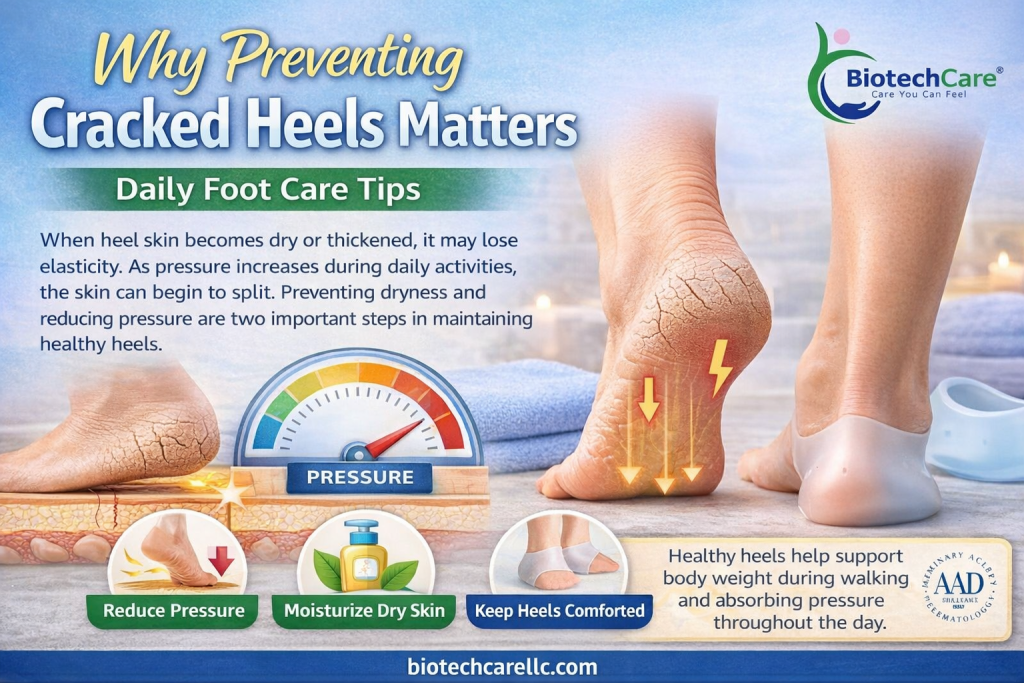
Why Preventing Cracked Heels Matters
The heels play an important role in supporting body weight and absorbing pressure during walking. Because of this, the skin in this area experiences more stress than many other parts of the body.The heels play an important role in supporting body weight and absorbing pressure during walking. Because of this, the skin in this area experiences more stress than many other parts of the body.
When heel skin becomes dry or thickened, it may lose elasticity. As pressure increases during daily activities, the skin can begin to split. Preventing dryness and reducing pressure are two important steps in maintaining healthy heels.
Experts from the American Academy of Dermatology explain that dry skin occurs when the skin loses natural oils and moisture, making it more prone to roughness and cracking.
By following a consistent foot care routine, many people can reduce the likelihood of cracked heels developing in the first place.
1. Moisturize Daily to Prevent Cracked Heels Naturally
One of the most effective ways to prevent cracked heels naturally is to keep the skin well moisturized.
Because the heel area contains fewer oil glands, it can become dry more quickly than other areas of the body. Applying moisturizer daily helps maintain skin flexibility and reduces the risk of splitting.
Many dermatology specialists recommend applying moisturizer after washing your feet because the skin absorbs moisture more effectively at that time.
Moisturizing regularly can help:
• Maintain skin elasticity
• Reduce roughness and dryness
• Improve overall heel comfort
If your heels already feel dry, you can explore practical solutions in this guide on how to heal dry cracked heels at home.Moisturizing regularly is one of the easiest ways to prevent cracked heels naturally and keep the skin soft and flexible.
2. Wear Supportive Footwear to Prevent Cracked Heels
Footwear plays a significant role in preventing cracked heels. Shoes that provide proper heel support help reduce pressure and prevent the heel pad from expanding outward during walking.
Shoes that may contribute to heel cracks include:
• Flip-flops
• Open-back sandals
• Slippers without heel support
When the heel pad spreads outward repeatedly, the surrounding skin can stretch and eventually crack.
Wearing supportive shoes that provide cushioning and heel support can help distribute body weight more evenly.Choosing supportive footwear is another important step to prevent cracked heels naturally, especially for people who stand or walk for long periods.
3. Protect Your Heels From Friction Naturally
Walking barefoot on hard surfaces can increase pressure on the heel area. Hard flooring does not absorb impact well, which means the heel experiences greater stress during each step.
Over time, repeated pressure can cause the outer skin layer to thicken. Thickened skin may lose flexibility and become more prone to cracking.
For individuals who spend long periods at home, wearing supportive indoor footwear or cushioned socks can help reduce heel pressure.
4. Exfoliate Dead Skin Gently
Dead skin buildup around the heel can lead to thickened skin that is less flexible. When this hardened layer expands under pressure, cracks may develop.
Gentle exfoliation can help remove excess dead skin and keep the heel surface smoother.
Safe exfoliation methods may include:
• Using a pumice stone
• Gentle foot scrubs
• Foot files designed for heel care
However, exfoliation should be done carefully and not too frequently. Over-exfoliating can irritate the skin and lead to additional dryness.
For a more complete routine, you can read our detailed cracked heel care guide which explains effective foot care practices.
5. Keep Your Feet Clean and Dry
Daily hygiene is another important factor in preventing cracked heels.
Washing your feet helps remove sweat, dirt, and buildup that may affect skin health. After washing, it is important to dry the feet thoroughly, especially around the heel and between the toes.
Clean and dry feet help maintain healthier skin and reduce irritation that can worsen dryness.
The Mayo Clinic guide on dry skin explains that environmental factors and moisture imbalance can affect skin health and contribute to dryness.
6. Stay Hydrated
Hydration plays an important role in overall skin health. When the body becomes dehydrated, the skin may lose moisture and elasticity.
Drinking enough water throughout the day can support natural skin hydration and improve skin flexibility.
Although hydration alone may not completely prevent cracked heels, it supports healthier skin function and can reduce dryness over time.
7. Protect Your Heels From Friction
Daily walking and movement create friction between the feet and footwear. Over time, repeated friction may cause the outer skin layer to thicken.
Thickened skin can lose flexibility and become more likely to crack.
Many individuals use protective cushioning solutions like silicone heel protectors which provide a soft protective layer around the heel. These products can help reduce friction and distribute pressure during walking.
Because silicone materials are flexible and lightweight, they allow natural movement while providing additional heel comfort.
8. Reduce Prolonged Pressure on the Heels
Standing for long periods places continuous pressure on the heel area. Many professions involve extended standing throughout the day.
Examples include:
• Retail workers
• Teachers
• Healthcare professionals
• Factory employees
• Warehouse staff
Continuous pressure may cause the heel pad to expand sideways, stretching the surrounding skin.
Taking short breaks when possible, stretching the feet, and wearing supportive footwear can help reduce prolonged pressure.
9. Follow a Consistent Foot Care Routine
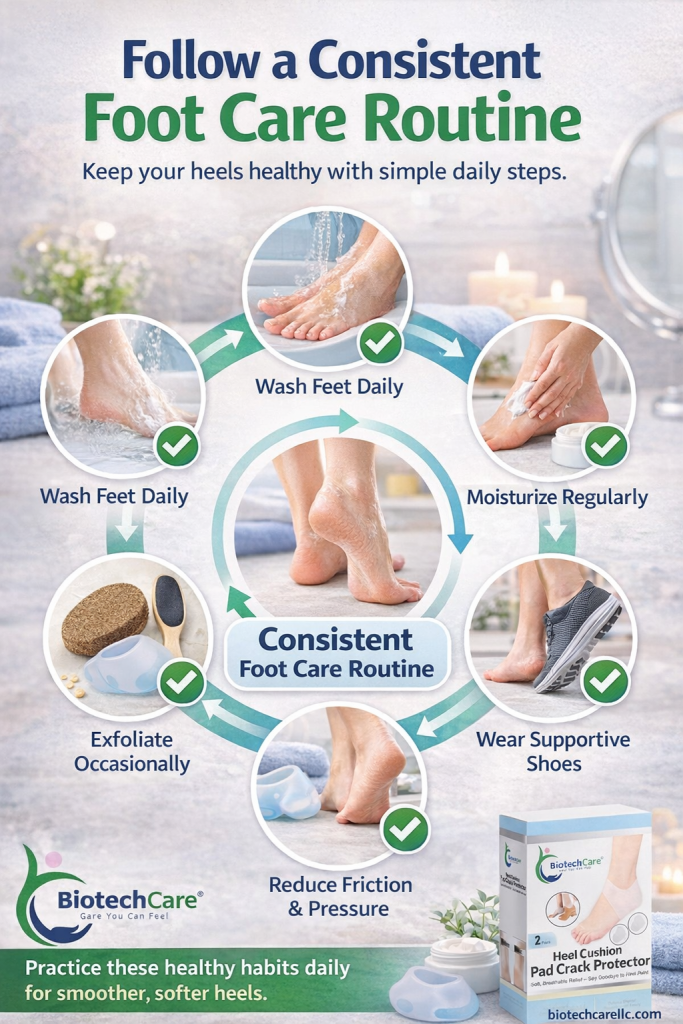
Consistency is one of the most important aspects of preventing cracked heels naturally.
A simple daily routine can make a noticeable difference in maintaining healthy heel skin.
A basic foot care routine may include:
• Washing feet daily
• Moisturizing regularly
• Wearing supportive footwear
• Reducing friction and pressure
• Exfoliating occasionally
By following these habits consistently, many people can maintain smoother heel skin and reduce dryness.
For additional tips and helpful foot care resources, you can explore the information available on the BiotechCare website.
Why Cracked Heels Often Develop in Winter
Many people notice that cracked heels become worse during colder months. Winter air typically contains less humidity, which can cause the skin to lose moisture more quickly.
Indoor heating systems may also dry the air, further reducing skin hydration.
When heel skin becomes dry and less flexible, pressure from walking can lead to small splits along the heel edges.
Learning how to prevent cracked heels naturally starts with simple daily habits that support healthy skin.
Applying moisturizer regularly and protecting the heel area during colder seasons can help reduce dryness.
Why It Is Important to Prevent Cracked Heels Naturally
Some individuals may need to pay closer attention to heel health due to lifestyle or daily routines.
People who may experience more heel pressure include:
• Individuals who stand for long hours
• People who walk frequently during the day
• Athletes and fitness enthusiasts
• Individuals who wear open-back footwear regularly
Protecting the heel area and maintaining proper foot care can help reduce the risk of cracks developing.
Final Thoughts
Preventing cracked heels naturally is often possible with simple daily habits. Moisturizing the skin, wearing supportive footwear, reducing friction, and maintaining proper hygiene can all support healthier heel skin.
Understanding how daily activities affect the feet can also help individuals take proactive steps to protect their heels from dryness and pressure.
With a consistent foot care routine, many people can maintain smoother skin and improve overall foot comfort. Small habits practiced regularly can make a significant difference in preventing cracked heels over time.
When people understand how to prevent cracked heels naturally, they can avoid dryness, pressure damage, and discomfort in the heel area.
Taking care of your feet is an important part of maintaining overall wellness, especially for individuals who rely on their feet throughout busy daily routines. By building healthy habits and maintaining daily foot care routines, many people can prevent cracked heels naturally and maintain smoother skin.
| Daily Habit | Benefit |
|---|---|
| Moisturizing | Keeps skin flexible |
| Supportive shoes | Reduces heel pressure |
| Gentle exfoliation | Removes thick skin |
| Heel protection | Reduces friction |
Frequently Asked Questions
Infographic: 6 Daily Habits That Help Prevent Cracked Heels Naturally
Small daily habits can make a big difference in keeping heel skin smoother, softer, and more comfortable.
Moisturize Daily
Hydrated heel skin stays more flexible and is less likely to become rough or dry over time.
Wear Supportive Footwear
Supportive shoes help reduce repeated pressure on the heel area during standing and walking.
Keep Feet Clean
Washing and drying your feet daily helps maintain healthier skin and better overall foot comfort.
Exfoliate Gently
Removing rough buildup carefully may help prevent thickened heel edges from becoming less flexible.
Reduce Friction
Protecting the heels from repeated rubbing may support smoother skin and better daily comfort.
Avoid Barefoot Impact
Hard surfaces can increase heel pressure, especially during long periods of walking at home.
Infographic: Simple Daily Heel Care Routine
Follow this simple routine to support healthier heel skin throughout the week.
Wash
Clean feet daily to remove sweat, dirt, and buildup from the skin.
Dry
Dry thoroughly, especially around the heel area and after bathing.
Moisturize
Apply heel moisturizer to support softness and maintain skin flexibility.
Protect
Use supportive footwear or heel protection during daily movement.
Repeat
Consistency is the key to better-looking and more comfortable heels.
Infographic: What Increases Heel Stress vs What Supports Heel Comfort
Daily choices can either increase heel dryness and pressure or help support healthier heel skin.
Habits That May Increase Rough Heels
- Walking barefoot on hard floors
- Wearing flip-flops or open-back footwear often
- Standing for long hours without cushioning
- Skipping moisturizer regularly
- Ignoring rough or thickened heel skin
Habits That May Improve Daily Heel Care
- Using moisturizer as part of a simple routine
- Choosing supportive shoes with better heel coverage
- Reducing friction around the heel area
- Gently exfoliating rough skin when needed
- Using soft heel cushioning during daily activity
Infographic: Who May Benefit Most From Daily Heel Protection?
People with active routines or prolonged standing may benefit from extra heel support during the day.
Healthcare Workers
Long shifts and constant standing can place repeated pressure on the heels.
Teachers
Busy days on hard floors may increase heel stress over time.
Retail Staff
Frequent walking and long standing hours may affect heel comfort.
Warehouse Workers
Repetitive movement and pressure may contribute to rough heel skin.
Active Individuals
Running and long walking routines may increase daily heel friction.
At-Home Walkers
Walking barefoot indoors on hard surfaces may dry and stress the heels.