
Heal dry cracked heels at home with simple daily foot care habits that help restore comfort and support healthier skin around the heel area. Dry cracked heels are a common concern for many people, especially those who spend long hours standing or walking. Pressure on the heel, dry skin, and friction from footwear can all contribute to rough or cracked heel skin over time.Many people search for ways to heal dry cracked heels at home without complicated treatments.
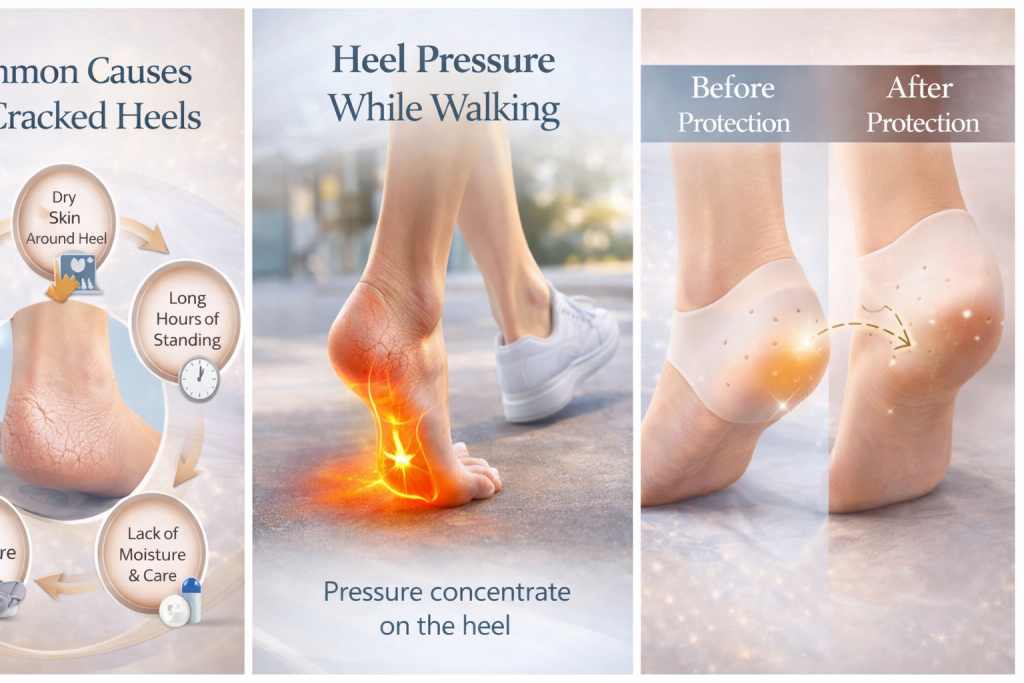
Several factors may contribute to heel dryness. Long hours of standing, friction from footwear, environmental dryness, and lack of regular foot care may all affect the skin around the heel area. When the skin loses moisture and flexibility, it may begin to develop rough patches or visible cracks.
Fortunately, simple home care habits can help support healthier heel skin and improve everyday comfort. In this guide, we’ll explore common causes of cracked heels and share practical steps that may help you maintain smoother heels from home. If you’re interested in learning more about foot wellness products designed for daily comfort, you can explore the solutions available at biotech Care
What Causes Dry Cracked Heels?
Understanding the causes of cracked heels is the first step toward improving heel comfort. The heel naturally carries significant pressure during daily movement, which can sometimes contribute to dryness.
pressure on dry skin around the heel can cause the skin to become rough or split over time.
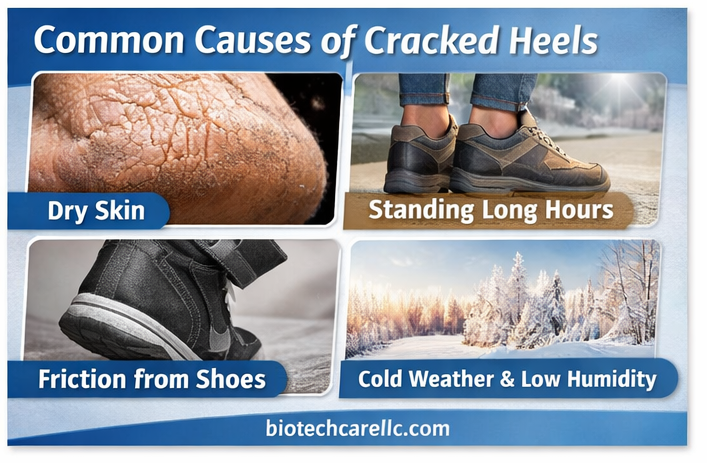
Environmental conditions may also contribute to dryness. Cold weather and low humidity can reduce moisture levels in the skin.
You can learn more about these causes in the Mayo Clinic guide on dry skin causes.Other contributing factors may include:
- Standing for long periods of time
- Wearing shoes that create friction around the heel
- Lack of regular moisturizing
- Exposure to dry climates
Recognizing these factors can help you take simple steps to support healthier skin.
How to Heal Dry Cracked Heels at Home Naturally
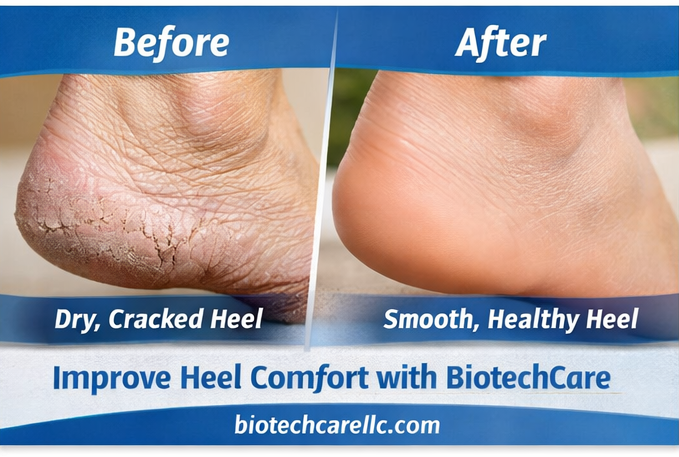
Dry heels often develop gradually. Paying attention to early signs can help prevent the condition from becoming more noticeable.
Some common signs include:
- Rough or flaky skin around the heel
- Thickened patches of skin
- Visible lines on the heel surface
- Mild discomfort when walking
- Skin that feels dry or tight
Maintaining a simple foot care routine can help support healthier skin around the heel area.
7 Ways to Heal Dry Cracked Heels at Home
These simple habits may help you heal dry cracked heels at home while supporting everyday foot comfort.
1. Keep Feet Clean and Dry
Washing your feet daily helps remove dirt, sweat, and buildup that may affect skin health. After washing, dry your feet thoroughly, especially around the heel area.
2. Moisturize the Heel Area Regularly
Applying a moisturizer can help maintain hydration and support skin flexibility. Many people prefer applying foot cream before bedtime to allow the skin to absorb moisture overnight.
3. Wear Comfortable Footwear
Shoes that provide cushioning and proper heel support may help reduce pressure on the heel area during walking or standing.
4. Avoid Shoes That Cause Friction
Footwear that rubs repeatedly against the heel may increase irritation. Choosing well-fitting shoes can help reduce friction.
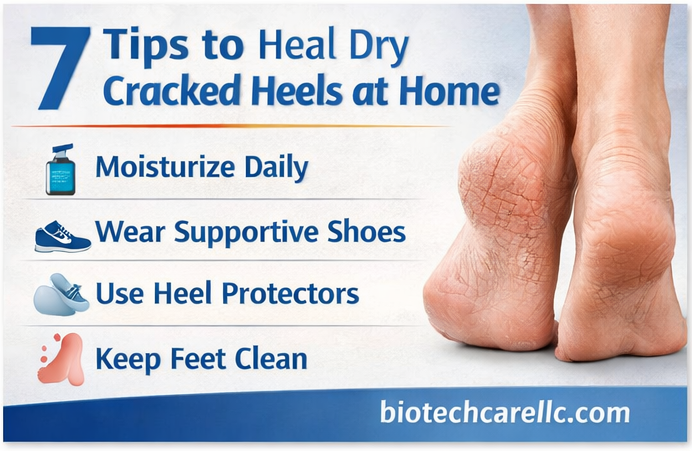
5. Use Heel Protectors for Cushioning
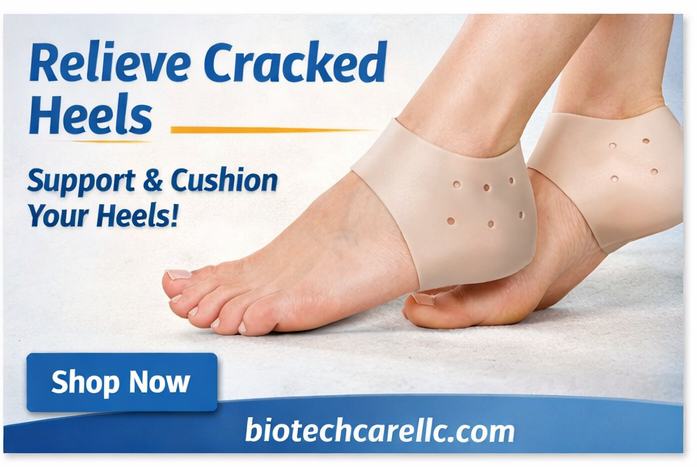
Some people use soft silicone heel sleeves to help reduce friction between the heel and footwear. These flexible sleeves create a gentle cushioning layer around the heel during everyday activities.
You can learn more about this option by visiting the silicone heel protectors page.6. Wear Socks After Moisturizing
Wearing socks after applying moisturizer may help retain hydration and support smoother skin overnight.
7. Reduce Pressure When Possible
If your job requires standing for long periods, taking short breaks can help reduce constant pressure on the heel area.
Building a Simple Heel Care Routine
Consistency is key when it comes to maintaining healthy skin around the heel area. A basic routine can help support everyday comfort.
Morning
- Wash and dry your feet
- Apply moisturizer if needed
- Wear comfortable supportive shoes
During the Day
- Avoid shoes that cause rubbing
- Take short breaks if standing for long periods
Evening
- Clean your feet
- Apply moisturizer to the heel area
Night
- Wear socks after moisturizing to help retain hydration
If you want a deeper explanation of heel dryness and prevention strategies,
you can read the complete cracked heel care guide available on the BiotechCare website.Supporting Foot Comfort During Everyday Activities
With the right routine, it is possible to heal dry cracked heels at home and maintain smoother heel skin over time.
People who spend long hours on their feet often experience more pressure around the heel area. Workers in healthcare, retail, restaurants, and warehouses may especially notice this type of strain.
Using cushioning solutions and supportive footwear can help make daily activities more comfortable. Many people prefer lightweight foot care accessories that help reduce friction and provide gentle cushioning during movement.
If you would like to explore additional solutions designed to support everyday foot comfort,
you can browse the collection of foot care products available at BiotechCare. For additional educational information about foot health, the American Podiatric Medical Association provides helpful guidance on maintaining healthy feet.Final Thoughts
Dry cracked heels are a common concern, especially for people who spend long hours standing or walking throughout the day. Fortunately, simple daily habits can help support healthier heel skin and improve everyday comfort.
Maintaining a regular foot care routine, wearing supportive footwear, and reducing friction around the heel area can all contribute to smoother and more comfortable heels. Learning more about proper foot care and exploring supportive solutions available at Biotech Care can help you build a routine that supports everyday foot wellness.
| Product | Best for | Where it helps | Comfort focus | Best time to use | Why people choose it |
|---|---|---|---|---|---|
|
Silicone Heel Protectors (Heel sleeves / heel cushioning pads) |
Dry, rough heel comfort Heel friction Standing pressure | Heel area (helps create a soft barrier between heel and footwear) | ✓ Gentle cushioning + reduced rubbing | Work shifts, walking, daily wear inside roomy shoes or with socks | Supports everyday comfort for people who stand or walk a lot and want heel-area cushioning |
| Wool Comfort Insoles | All-day cushioning Everyday walking Work shoes | Whole foot inside shoes | ✓ Full-foot cushioning + comfort | Daily wear in sneakers/boots/work shoes (great for long hours) | Helps improve overall shoe comfort and supports long standing or walking routines |
| Ball of Foot Cushions / Metatarsal Pads | Forefoot pressure Daily shoes Front-foot comfort | Ball of foot / forefoot area | ✓ Pressure distribution at forefoot | When the front of your foot feels tired in daily shoes | Targets front-foot pressure and helps support comfort during walking |
| Toe Separators / Toe Stretchers | Toe spacing Relaxation Stretching | Toe area (between toes) | ✓ Gentle spacing during rest | At home during relaxation, yoga, stretching, pedicure routines | Used to support natural toe spacing during rest-based routines (not for tight shoes) |
| Corn Cushions | Shoe rubbing points Targeted cushioning | Specific pressure points that rub in shoes | ✓ Targeted cushion barrier | When a specific spot feels irritated by shoe contact | Creates a protective barrier to reduce rubbing on sensitive areas |
| Electric Callus Remover | Rough skin maintenance Foot care routine | Heel and foot surface (rough areas) | ✓ Grooming + smoothing routine | At home (follow product instructions and routine preferences) | Used as part of a regular foot care routine to maintain smoother-looking feet |
Tip: For a simple routine, many people combine heel protection (to reduce friction) with consistent moisturizing and supportive footwear for everyday comfort.
Quick Infographics: Heal Dry Cracked Heels at Home
Use these visual summaries to review the key causes of heel dryness, a simple daily routine, and practical comfort tips for standing and walking.
CAUSE 1
Low Moisture (Dry Skin)
When heel skin becomes dry, it may feel rough and less flexible.
CAUSE 2
Friction From Footwear
Repeated rubbing from shoes can irritate the heel area during daily movement.
CAUSE 3
Standing Pressure
Long hours on hard floors can increase heel pressure and reduce comfort.
4-Step Daily Heel Care Routine
Clean + Dry
Wash feet daily and dry fully around heel edges.
Moisturize
Apply after shower and again at night for consistency.
Reduce Friction
Choose well-fitting shoes and socks that feel comfortable.
Add Cushioning
Use heel protection in roomy shoes for daily comfort support.
Morning vs Night: Simple Checklist
MORNING
- Dry feet fully after washing
- Wear supportive shoes
- Reduce rubbing with comfortable socks
NIGHT
- Moisturize heel area consistently
- Wear socks to help retain moisture
- Rest feet after long standing
When to Use Heel Protection
- Before long shifts or busy days
- When shoes rub the heel area
- During daily walking routines
- When you want extra heel cushioning
Staff picks
-

200L Premium 95% Corn Ethanol | Food-Grade & Hospital-Grade Alcohol | Biotech Care – Bulk Medical Supplier
$8.00 -

24Hours NIBP Holter ABPM50 Ambulatory Blood Pressure Monitoring System Monitor
-
3 in 1 Cordless High Frequency Hand Held Facial Wand Anti Aging Face Lifting Skin Tightening Acne Treatment Skin Therapy
-
50 mL PES Hydrophilic Membrane Ultrafiltration Centrifuge Tubes 5 KDa100 KDa Low-Binding Protein Concentration Tubes