
Cracked heel care starts with understanding why heels become dry, rough, and uncomfortable during daily life. If you stand for long hours, walk frequently, or wear shoes that create friction, the heel area can lose moisture and feel irritated over time. This guide covers the most common causes of dry, cracked heels and shares simple habits and heel protection options that support everyday foot comfort.
Understanding the causes of cracked heels and learning how to care for your feet properly can help improve overall foot comfort and support healthier daily movement.
This guide explains what causes cracked heels, why they occur, and how simple foot care practices — including protective products like silicone heel protectors — can help support a comfortable foot care routine.
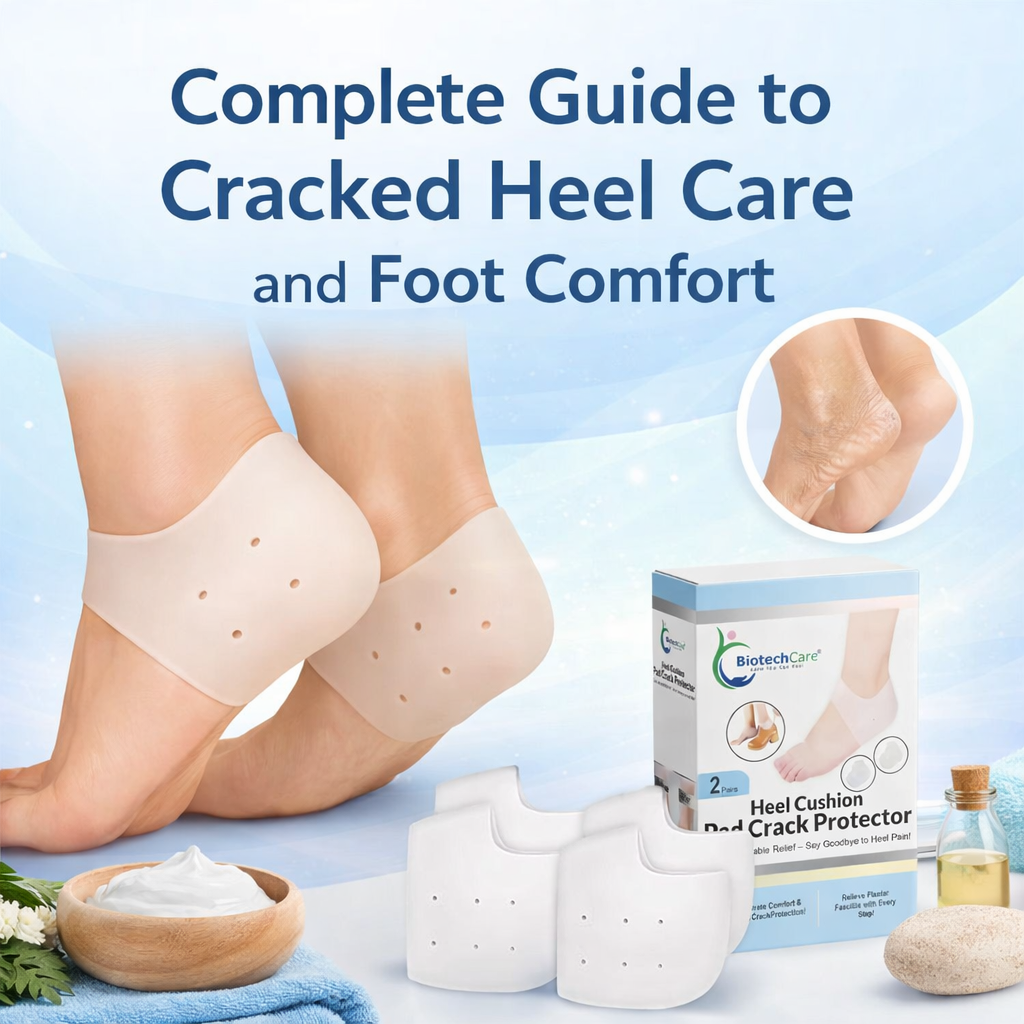
Cracked Heel Care: What Causes Dry, Rough Heels?
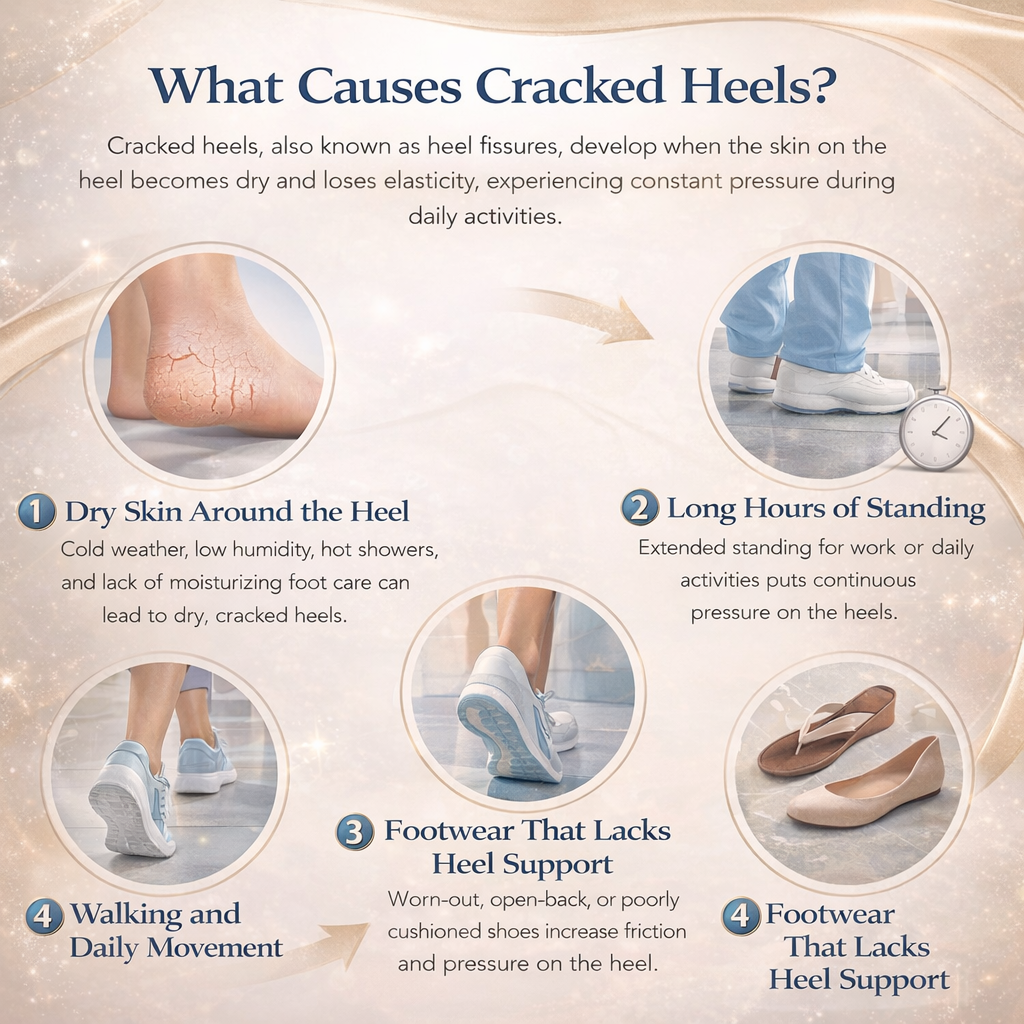
Cracked heels, sometimes called heel fissures, often develop when the skin on the heel becomes dry and loses elasticity. The heel area naturally carries a large amount of body weight, which means it is exposed to constant pressure during standing, walking, or daily activities.
For additional foot-care education, you can also review guidance from trusted health sources like Cleveland Clinic, Mayo Clinic, and the American Podiatric Medical Association (APMA).
Several factors can contribute to heel dryness and cracking.
1. Dry Skin Around the Heel
When the skin on the heel becomes excessively dry, it can lose flexibility. This makes it more likely to develop small cracks or rough patches.
Dry skin can occur due to:
- Cold weather
- Low humidity environments
- Hot showers
- Lack of moisturizing foot care
2. Long Hours of Standing
People who spend long hours standing often place continuous pressure on their heels. Jobs in healthcare, retail, restaurants, teaching, and warehouses require workers to stay on their feet for extended periods.
This pressure can cause the skin around the heel to expand sideways, which may increase the likelihood of cracking when the skin is dry.
3. Footwear That Lacks Heel Support
Shoes that do not provide proper cushioning or heel support can contribute to friction around the heel area. Open-back shoes, sandals, or poorly fitted footwear may increase pressure on the heel.
Over time, this friction can lead to rough skin and discomfort.
4. Walking and Daily Movement
Regular walking naturally places repeated pressure on the heel. Without proper cushioning or support, this repeated impact may contribute to dryness or rough skin over time.
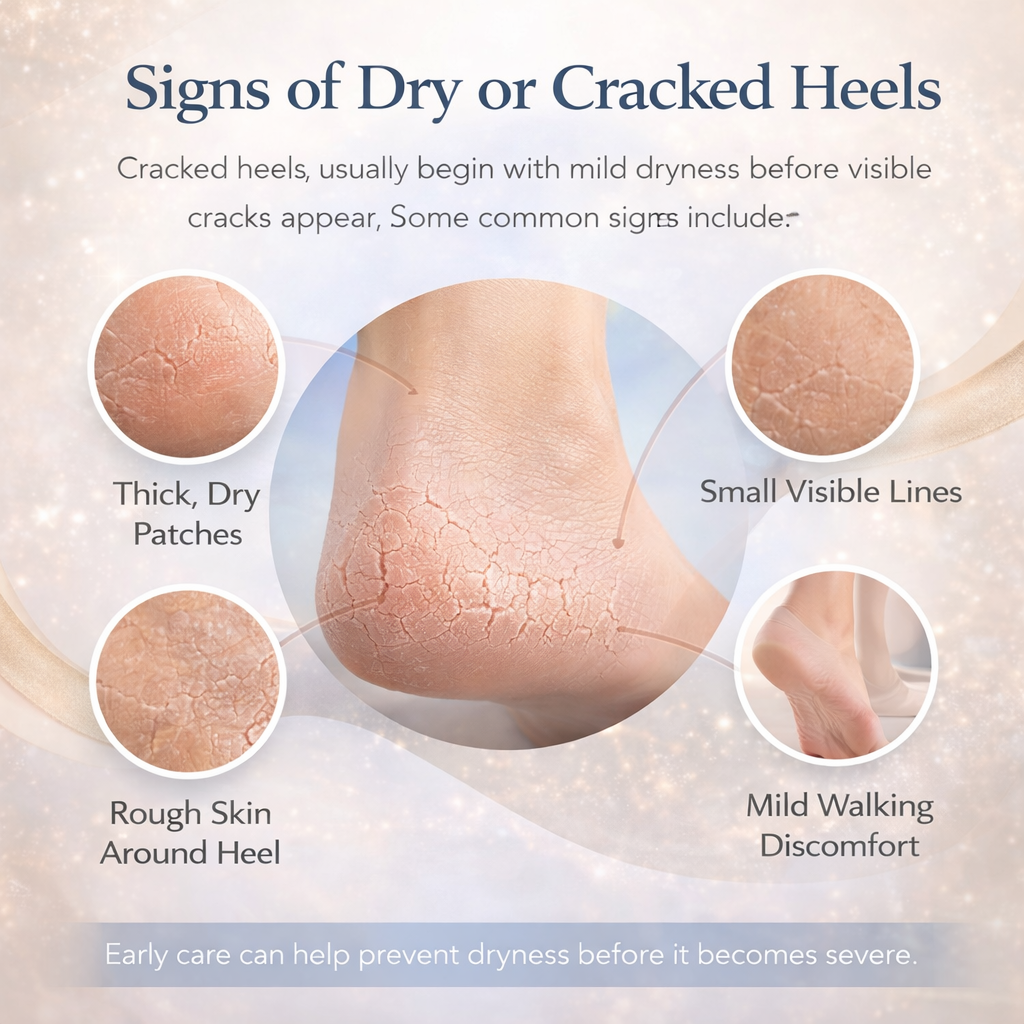
Signs of Dry or Cracked Heels
Cracked heels usually begin with mild dryness before visible cracks appear. Some common signs include:
- Rough skin around the heel
- Thick or dry patches of skin
- Small visible lines on the heel
- Flaky or peeling skin
- Mild discomfort when walking
Why Heel Comfort Matters for Everyday Movement
Your heels play an important role in supporting the body during walking and standing. Every step you take transfers pressure through the heel before moving toward the rest of the foot.
When the heel becomes dry or uncomfortable, it may affect overall foot comfort. People who spend long hours walking or standing may especially notice heel pressure during daily routines.
Maintaining proper heel care can help support natural foot movement and improve daily comfort.
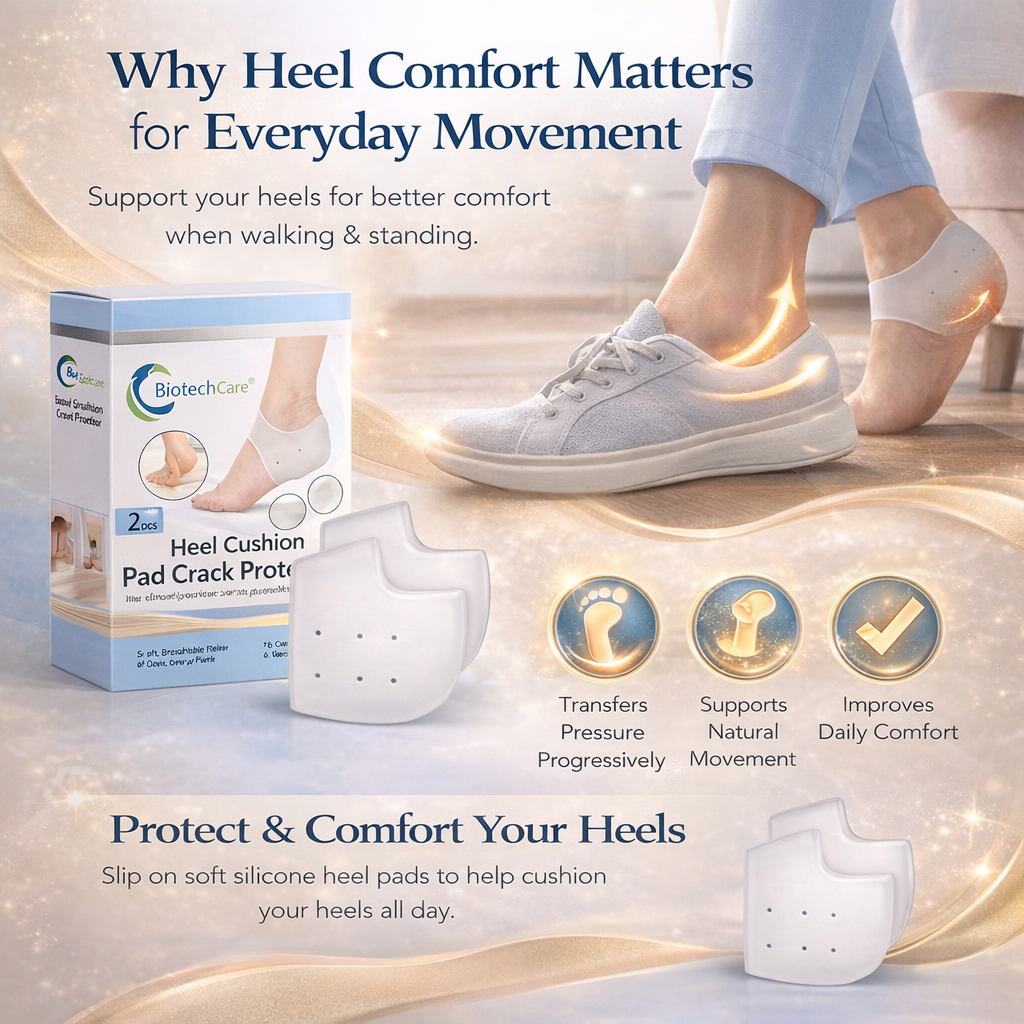
Why Heel Comfort Matters for Everyday Movement
Your heels play an important role in supporting the body during walking and standing. Every step you take transfers pressure through the heel before moving toward the rest of the foot.
When the heel becomes dry or uncomfortable, it may affect overall foot comfort. People who spend long hours walking or standing may especially notice heel pressure during daily routines.
Maintaining proper heel care can help support natural foot movement and improve daily comfort.
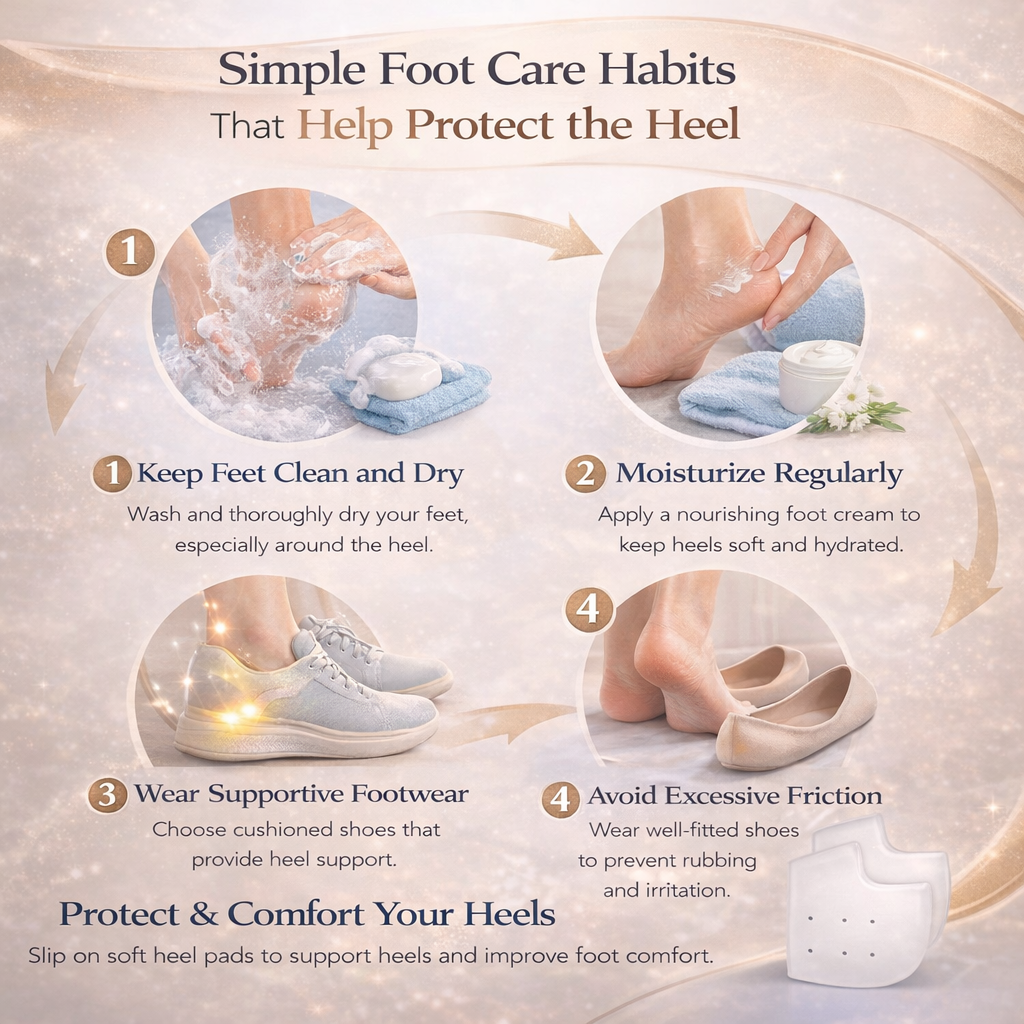
Simple Foot Care Habits That Help Protect the Heel
Taking care of your feet does not require complicated routines. A few consistent habits can help support healthier heel skin and improve overall foot comfort. A simple cracked heel care routine often includes cleaning, drying, and moisturizing the heel area consistently.
Keep Feet Clean and Dry
Washing your feet daily helps remove dirt, sweat, and buildup that may affect skin health. After washing, drying the feet thoroughly — especially around the heel — helps prevent irritation.
Moisturize Regularly
Applying a foot moisturizer can help maintain skin hydration. Moisturizing the heel area may improve skin flexibility and reduce dryness.
Wear Supportive Footwear
Shoes with good cushioning and proper heel support may help reduce pressure during walking or standing.
Avoid Excessive Friction
Footwear that rubs against the heel repeatedly can increase irritation. Choosing well-fitted shoes can help reduce friction.
How Heel Protectors Help Support Foot Comfort
Heel protectors are commonly used as part of daily foot care routines to provide cushioning and reduce friction around the heel area.
Silicone heel protectors are designed to create a soft barrier between the heel and footwear. The flexible sleeve fits around the heel and helps reduce rubbing caused by walking or standing.
Some people prefer heel protectors because they are:
- Lightweight
- Flexible
- Reusable
- Comfortable for daily wear
They can be worn inside roomy shoes, sneakers, or boots.
For people who spend long hours on their feet, heel protectors may help support everyday comfort.
👉 Explore our silicone heel protectors designed for daily foot comfort.

Who May Benefit From Heel Protection
- Retail workers
- Teachers
- Nurses and healthcare professionals
- Warehouse workers
- Fitness enthusiasts
- People who walk frequently during the day
The flexible silicone material allows natural foot movement while providing a cushioning layer around the heel.
Cracked Heel Care Products: Heel Protection Options
While heel protectors provide cushioning around the heel, other foot care products may support overall foot comfort as well.
Wool Comfort Insoles
Wool insoles provide cushioning and insulation inside shoes. They are often used to improve comfort during long periods of walking or standing.
Ball of Foot Cushions
Ball of foot cushions help distribute pressure across the front of the foot, which may help reduce strain during movement.
Toe Separators
Toe separators are designed to gently space the toes and support natural alignment during relaxation or stretching routines.
Corn Cushions
Corn cushions create a protective barrier between sensitive skin and footwear.
Combining different foot care solutions can help support a more comfortable daily routine.
Building a Simple Daily Foot Care Routine
A simple daily routine can help maintain foot comfort and support healthier skin around the heel.
A typical foot care routine may include:
- Cleaning the feet regularly
- Moisturizing dry areas
- Wearing supportive footwear
- Using cushioning products when needed
- Allowing the feet to rest after long periods of standing
Consistent care helps maintain healthier skin and overall comfort.
Foot Comfort for People Who Stand All Day
Many professions require individuals to stay on their feet for long periods. Workers in retail, healthcare, construction, and hospitality may experience increased foot pressure during the day.If you stand all day, cracked heel care should focus on reducing friction and supporting comfort during long shifts.
Foot comfort products such as heel protectors and cushioned insoles may help provide additional support during long work shifts.
Supporting your feet properly can make daily activities more comfortable and help maintain mobility.
When to Pay Attention to Foot Health
While mild dryness is common, it is important to monitor foot health regularly. Keeping the heel area clean, moisturized, and protected can help prevent excessive dryness.
If discomfort persists, consulting a foot care professional may be helpful.
Final Thoughts on Cracked Heel Care
Cracked heels are a common condition that many people experience due to dryness, pressure, and everyday movement. By understanding the causes and practicing consistent foot care, it is possible to support healthier heels and improve daily comfort. Many people include silicone heel sleeves as part of cracked heel care because they add gentle cushioning inside roomy shoes.
Simple habits such as moisturizing, wearing supportive footwear, and using cushioning products like BiotechCare silicone heel protectors can help protect the heel and support everyday foot wellness.
Taking small steps toward better foot care can make a noticeable difference in overall comfort and mobility.
With consistent cracked heel care and daily comfort habits, many people notice their heels feel smoother and more comfortable over time.
Cracked Heel Care FAQs
Cracked Heel Care FAQs
These FAQs cover common questions about cracked heel care, dry heels, and everyday comfort options like silicone heel protectors, heel sleeves, and supportive footwear habits.
What causes cracked heels?
Cracked heels often develop when heel skin becomes dry and less flexible. Common contributors include repeated friction from footwear, standing or walking for long hours, and low moisture in the skin around the heel area.
Why are my heels so dry even after moisturizing?
Dry heels may persist if moisture isn’t applied consistently, if the skin is exposed to frequent friction, or if you’re using harsh soaps or very hot showers. For many people, a nightly routine plus protective footwear habits supports better heel comfort.
What is a simple cracked heel care routine?
A simple routine includes washing feet, drying thoroughly, applying moisturizer to the heel area, and reducing friction from shoes. Many people also use a soft protective layer (like silicone heel protectors) inside roomy footwear for daily comfort.
How can I help prevent cracked heels from coming back?
Consistency matters. Keep heels moisturized, avoid repeated rubbing, wear supportive shoes, and consider heel cushioning if you’re on your feet all day. Prevention is often easier than fixing severe dryness later.
Do certain shoes make cracked heels worse?
Yes. Shoes that rub the back of the heel, open-back footwear (like some sandals), or stiff heel counters can increase friction. A better fit and cushioning can reduce rubbing and support heel comfort.
Can standing all day cause heel discomfort and dryness?
Standing for long hours increases pressure on the heel area and can contribute to discomfort—especially on hard floors. Supportive shoes and cushioning options may help create a more comfortable daily routine.
What are silicone heel protectors used for?
Silicone heel protectors (also called heel sleeves) create a soft cushioning barrier around the heel to help reduce rubbing inside shoes and support everyday comfort during walking or standing.
Can I wear silicone heel protectors with shoes?
Yes. Many people wear heel protectors inside roomy shoes, sneakers, or boots. They can also be worn with socks depending on preference and shoe space.
Do heel sleeves stay in place while walking?
Most silicone heel sleeves are designed to fit snugly and move naturally with the foot. A proper fit and wearing them inside well-fitting shoes helps keep them comfortable during daily movement.
Are gel heel cups different from heel sleeves?
Yes. Gel heel cups typically sit under the heel inside the shoe, while heel sleeves wrap around the heel area. Some people prefer sleeves for reducing rubbing on the back/side of the heel, and cups for under-heel cushioning.
How do I clean silicone heel protectors?
Wash with mild soap and warm water, rinse well, and let them air-dry fully before reuse. Regular cleaning helps keep them fresh for daily wear.
Are heel protectors reusable?
Yes. Most silicone heel protectors are reusable and designed for repeated wear when cleaned and stored properly.
How long should I wear heel protectors each day?
If you’re new to heel sleeves, start with shorter periods (for example, 30–60 minutes) and gradually increase as comfortable. Many people wear them during work shifts or daily walking when extra cushioning is helpful.
What helps with heel discomfort from friction?
Try reducing rubbing with better shoe fit, soft socks, and a protective layer like silicone heel sleeves. Moisturizing the heel area can also support skin comfort and flexibility.
What’s the best time to moisturize heels?
Many people moisturize after a shower (when skin is clean and dry) and again at night. A consistent routine is often more effective than occasional use.
Can socks help with cracked heel care?
Yes. Wearing socks after moisturizing can help reduce moisture loss and may support softer heel skin over time. Choose comfortable socks that don’t increase friction in your shoes.
What daily habits support heel comfort?
- Dry feet thoroughly after washing (especially around the heel)
- Moisturize consistently
- Wear supportive, well-fitting footwear
- Reduce friction with cushioning or heel sleeves when needed
Can insoles help if I stand all day?
Many people use comfort insoles for extra cushioning during long work shifts or extended walking. Insoles support overall foot comfort, while heel sleeves can help specifically with heel-area rubbing.
Are cracked heels common in winter?
Yes. Cold weather and low humidity can contribute to dry skin, including the heel area. A consistent moisturizing routine and protective footwear habits are especially helpful during winter months.
When should I consider talking to a professional?
If heel cracks are painful, bleeding, or not improving with basic care, it’s a good idea to speak with a qualified healthcare professional for personalized guidance.
What keywords should I use to search for heel protection products?
Common search terms include silicone heel protectors, heel sleeves, gel heel cups, heel cushions, cracked heel protection, and heel comfort pads.
Are BiotechCare heel protectors suitable for everyday wear?
BiotechCare silicone heel protectors are designed for daily comfort routines and can be worn inside roomy footwear or with socks depending on your preference.
Cracked Heel Care: Quick Infographic + Comfort Tables
Use this end-of-page summary to review the most common causes of dry, cracked heels, the habits that support daily comfort, and practical heel protection options for standing and walking routines.
CAUSE 1
Heel Dryness (Low Moisture)
When heel skin becomes dry, it may feel rough or tight and lose flexibility.
CAUSE 2
Friction from Footwear
Repeated rubbing from shoes or sandals can irritate the heel area during daily movement.
CAUSE 3
Standing Pressure
Long hours on hard floors can increase heel pressure and reduce everyday foot comfort.
4-Step Cracked Heel Care Routine (Daily Comfort)
Clean + Dry
- Wash feet daily
- Dry fully (especially heel edges)
Moisturize
- Apply after shower
- Use nightly for consistency
Reduce Friction
- Choose well-fitting shoes
- Use socks if needed
Add Heel Protection
- Use silicone heel sleeves in roomy shoes
- Support comfort during walking/standing
| Common cause | What you may notice | Helpful habit | Comfort option |
|---|---|---|---|
| Heel dryness | Rough texture, tight feeling, flaky skin | Moisturize consistently after washing | Heel sleeves for a soft barrier |
| Footwear friction | Rubbing on heel edges or back of heel | Improve shoe fit; avoid repeated rubbing | Silicone heel protectors inside roomy shoes |
| Standing pressure | Heel fatigue after long shifts | Take micro-breaks; stretch calves/feet | Comfort insoles for daily cushioning |
| Open-back footwear | Heel edges exposed; dryness increases | Alternate footwear; moisturize more often | Heel protection for daily routines |
Tip: For best results, pair a consistent moisturizing habit with friction-reducing footwear and a comfortable heel protection option.
| Option | Best for | Where it works | Daily use tip |
|---|---|---|---|
| Silicone heel protectors / heel sleeves | Reducing rubbing + adding gentle cushioning | Around the heel area | Wear inside roomy shoes or with socks for comfort |
| Gel heel cups | Under-heel cushioning in shoes | Under the heel (inside shoe) | Works best in sneakers/boots with enough space |
| Comfort insoles | All-day standing and walking support | Full footbed (inside shoes) | Trim-to-fit if needed; use in work shoes |
| Moisturizing routine + socks | Supporting heel hydration | Heel skin care | Apply at night, then wear socks to reduce moisture loss |
Note: Choose based on your routine (standing, walking, footwear type) and how much space your shoes have.
Replace these links with your exact category/product URLs for best internal linking SEO.